
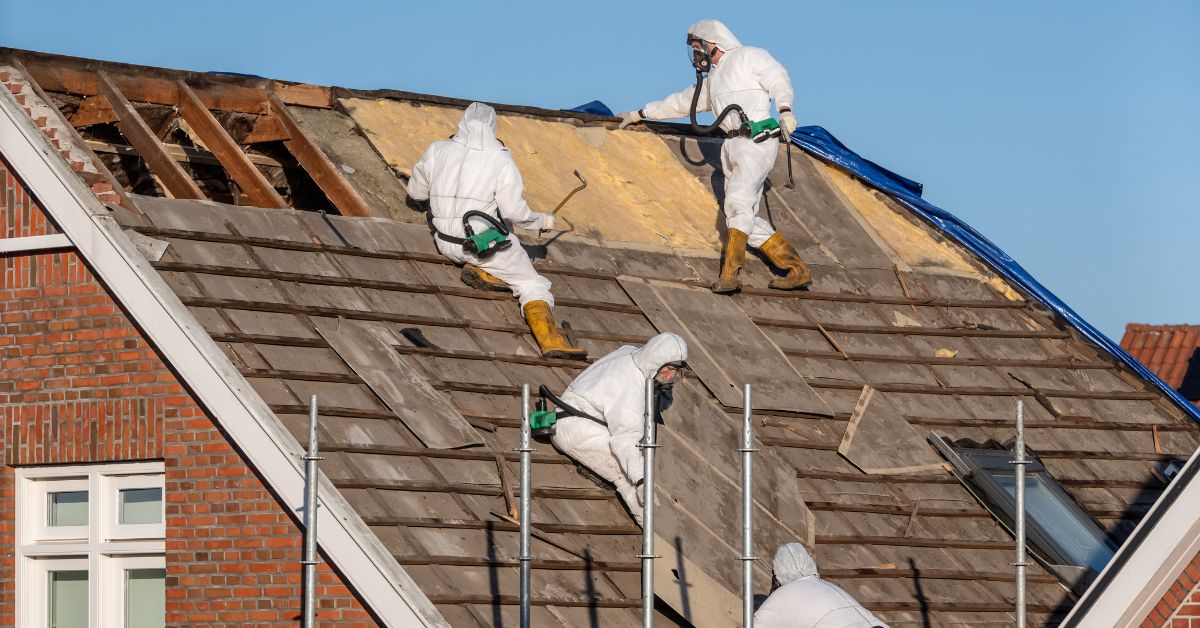
Asbestos was once widely used across Australia for its insulation and fire-resistant properties, but today it’s recognised as a hazardous material. Exposure to asbestos fibres can cause serious health issues, including asbestosis and certain types of cancer. With many older Australian homes still containing asbestos, builders often encounter this hazardous material during renovations or demolitions.
The big question homeowners and contractors often ask is, “Can a builder remove asbestos?” The answer depends on several factors—legal requirements, the type and amount of asbestos, and the builder’s qualifications. While some limited tasks may fall within a builder’s scope, extensive or high-risk removal should be handled by licensed asbestos removalists. This blog explores the role of builders in asbestos removal, focusing on the legal boundaries, training needs, and situations where calling a specialist is essential.
Builders vs. Licensed Asbestos Removalists
Legal Differences and Qualifications
In Australia, there is a clear legal distinction between general builders and licensed asbestos removalists:
- General Builders: These professionals often specialise in construction, renovations, and structural work. While builders may have some knowledge of asbestos safety, their core training revolves around building codes, structural integrity, and general site management.
- Licensed Asbestos Removalists: Individuals or companies holding a Class A or Class B Asbestos Removal Licence. A Class A licence permits the removal of all asbestos types (friable and non-friable), whereas a Class B licence allows removal of non-friable asbestos only. Licensed removalists must meet strict training and safety standards to ensure they handle and dispose of asbestos correctly.
Given the severity of health risks associated with asbestos exposure, legislation in each state and territory limits who can remove asbestos and how it must be handled. While builders can play a role, especially with minor or non-friable asbestos, major projects typically require the expertise of a licensed removalist.
When Builders Can Legally Handle Asbestos
Minor Non-Friable Asbestos Removal
Under specific conditions, builders may be permitted to remove small quantities of non-friable asbestos (e.g., asbestos cement sheeting, roofing, or pipes). Non-friable asbestos is generally less likely to release fibres unless it’s cut, drilled, or significantly damaged. Each state sets its own threshold for how much non-friable asbestos can be removed without a licence. For example:
- Queensland & New South Wales: Builders or homeowners without a licence may remove up to 10m² of non-friable asbestos, provided they follow strict safety guidelines.
- Other States/Territories: Similar guidelines often apply, but the exact square metre limit and procedures may vary.
Repair and Encapsulation
Builders sometimes encounter asbestos that doesn’t necessarily need to be removed entirely but rather encapsulated or sealed. This might involve painting over asbestos-containing materials (ACMs) with a specialised sealant to prevent fibres from becoming airborne. Provided the asbestos remains in good condition and is not disturbed, encapsulation can be a cost-effective and less intrusive alternative to full removal. Builders can often handle these minor repairs or encapsulations if they have received the proper safety training.
Training Requirements for Builders
Certifications and Safe Work Practices
While builders are not asbestos removal specialists by default, they can gain specific certifications or complete accredited courses on asbestos identification and safe handling. Such training equips them to:
- Identify asbestos-containing materials during site inspections.
- Assess the condition of the asbestos and decide whether minor repairs or a complete removal is necessary.
- Implement safety measures such as wearing appropriate protective equipment (PPE), using plastic sheeting to contain dust, and managing waste disposal responsibly.
Builders lacking formal asbestos-related training risk inadvertently exposing themselves, workers, and occupants to asbestos fibres. Even for small jobs, following official codes of practice is paramount. Failure to comply can lead to hefty fines, legal liabilities, and serious health repercussions.
Knowing When to Call a Specialist
Even though builders can legally remove certain types or quantities of asbestos, some situations demand a qualified asbestos removalist. Here are key indicators that a specialist should be engaged:
- Friable Asbestos Presence
- Friable asbestos (crumbly or easily pulverised) poses a high inhalation risk. A Class A licence is mandatory for removal.
- Large-Scale Projects
- If more than the state-specific limit (often 10m²) of asbestos material must be removed, a licensed professional is required to comply with legal thresholds.
- Complex or Hidden ACMs
- Asbestos might be concealed behind walls or in hard-to-reach places. Specialist equipment and thorough decontamination protocols are critical to prevent widespread contamination.
- Damaged or Deteriorated Asbestos
- Builders may discover asbestos that’s in poor condition—cracked, weathered, or showing signs of deterioration. Disturbed ACMs release fibres more easily, necessitating professional handling.
- Strict Health & Safety Requirements
- Commercial or public projects often have stringent rules around air monitoring, site clearance certificates, and disposal documentation, all of which a licensed removalist is best equipped to manage.
In these scenarios, a collaboration between a builder and a licensed asbestos removalist ensures the project proceeds smoothly and safely.
So, can a builder remove asbestos in Australia? Yes—under certain conditions and usually only for minor, non-friable asbestos tasks. Builders must still adhere to strict regulations regarding safe handling and disposal. However, for anything beyond small-scale or straightforward asbestos jobs, engaging a licensed asbestos removalist is the wisest, safest course of action.
Builders play a crucial role in renovation and construction projects, and part of that responsibility includes recognising asbestos risks and knowing their legal and professional limits. By collaborating with certified asbestos removal specialists when necessary, they ensure each project prioritises safety, compliance with Australian laws, and the long-term health of workers and occupants alike.